

AI-Fueled Tech Rout: Nasdaq Correction and Intel Weakness
Sunday, November 08, 2026
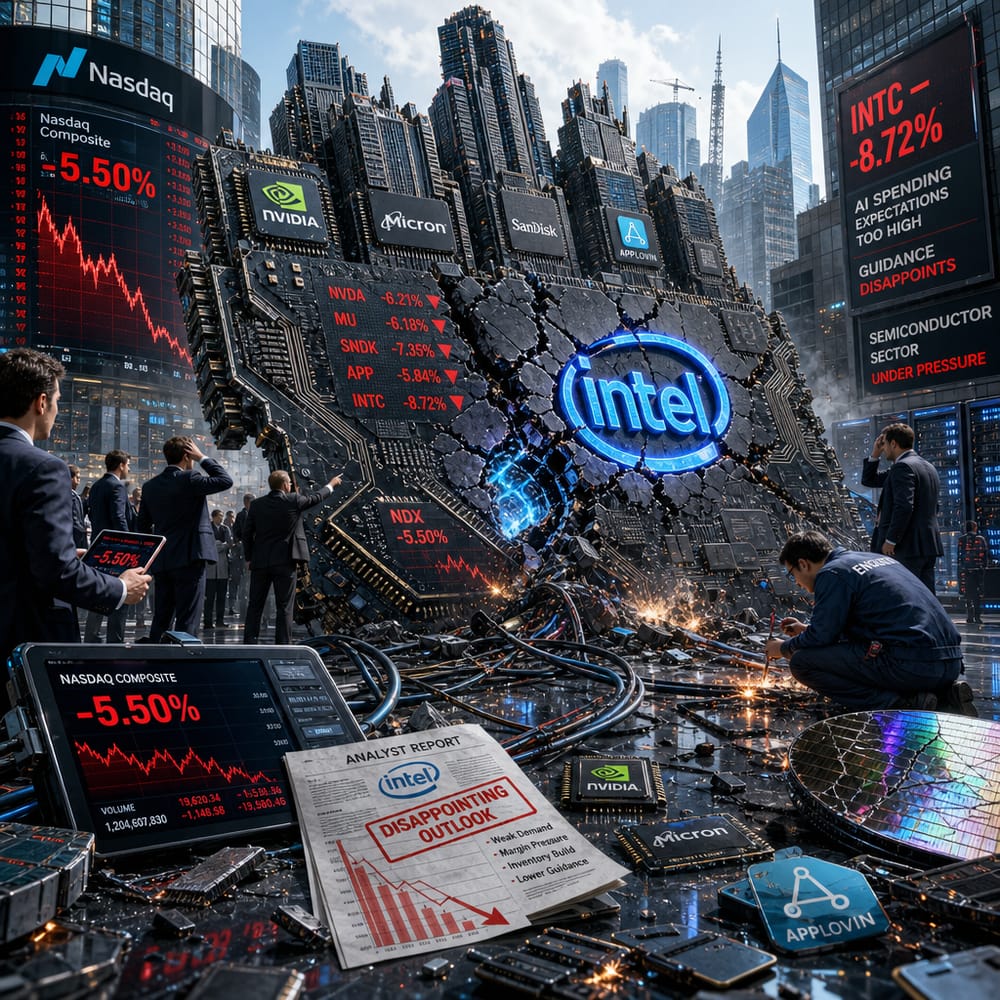
AI-FUELED TECH ROUT: NASDAQ CORRECTION AND INTEL WEAKNESS
Imagine waking up to find $2.5 trillion has vanished from the Nasdaq. Well, pinch yourself because that's the reality Wall Street is grappling with after the recent tech tumble. This isn’t just a market hiccup; it’s a full-blown stock market migraine, and the hangover has everyone asking one burning question: Is this AI's reckoning?
The recent Nasdaq nosedive, shedding a whopping 5.5% in one trading session, is the worst we’ve seen since 2025’s April showers. It’s as if investors suddenly decided that maybe, just maybe, the AI emperor isn’t wearing any clothes. It's a stark reminder that the tech sector, particularly those companies playing in the AI sandbox, is not invincible.
Intel, the semiconductor behemoth, didn’t help matters. It delivered an outlook that was more disappointing than finding coal in your Christmas stocking. The company’s dour forecast has dragged down the entire semiconductor sector. When Intel sneezes, companies like Micron and SanDisk catch a cold, leading to a sector-wide slump. So, what exactly is going on, and how do we navigate this rollercoaster?
AI SPENDING SKEPTICISM: THE LONG GAME
Let's start with the elephant in the server room: skepticism around AI spending. The tech world has been on a euphoric high with AI advancements propelling companies like Nvidia into the stratosphere. But now, the buzz is turning into a buzzkill. Investors wonder if they’ve been throwing money at wild-eyed dreams of a future that’s not quite here yet.
This AI skepticism might slow down the cash flow to companies that previously seemed like a sure bet. With public policy hurdles and moratoriums looming on data center construction, the dream of AI omnipresence is facing some serious headwinds. Long-term, this could mean a shift in where the smart money goes, favoring tangible tech over futuristic fantasies.
INTEL’S OUTLOOK: WHAT IT MEANS FOR SEMICONDUCTORS
Intel’s lackluster performance and bleak projections are casting long shadows over the semiconductor industry. Now, investors and analysts alike are asking: Is this a temporary stumble, or are we seeing foundational cracks? If Intel gets caught up in a prolonged slump, expect ripple effects throughout the tech supply chain. The real concern is whether this spells trouble for the plethora of companies relying on chips to power everything from smartphones to smart cars.
NAVIGATING VOLATILITY: STRATEGIES FOR INVESTORS
So, what’s an investor to do amid this tech tempest? Think of this market as a wild west rodeo—you’ll need to ride the bull, but you don’t want to get bucked off. Here are a few strategies to help stay in the saddle:
1. Diversification: It’s not as glamorous as picking the next tech unicorn, but a mixed portfolio is like a financial seatbelt. Bonds, commodities, and even under-the-radar sectors can help mitigate tech sector shocks.
2. Value over hype: Shift focus from high-flying growth stocks to those with solid fundamentals. Companies that are making money today, not just promising to tomorrow, are likely to be safer bets.
3. Keep an eye on the long term: Market corrections aren’t necessarily doom and gloom. They offer buying opportunities for those with a strategic eye. Remember, every tech giant started small, and downturns can birth the next big thing.
In the end, this Nasdaq freefall is a wake-up call for investors drunk on AI dreams. It’s a reminder that while technology has power, it’s not invincible, and neither are the stocks that trade on its promises. As the dust settles, and it will, savvy investors will have their eyes wide open, ready to ride the next wave—whatever it might be. Just make sure your portfolio is ready for the ride, and remember, sometimes it pays to be a little skeptical before jumping on the latest trend.
This article is for informational purposes only and is not investment advice. Always do your own research or consult a licensed financial professional before making investment decisions.
© Copyright 2024. All Rights Reserved.
© Copyright 2024. All Rights Reserved.