

AI Fallout Intensifies: S&P 500 and Nasdaq Sink as Nvidia and Mega-Caps Drag Markets Lower
Monday, November 16, 2026
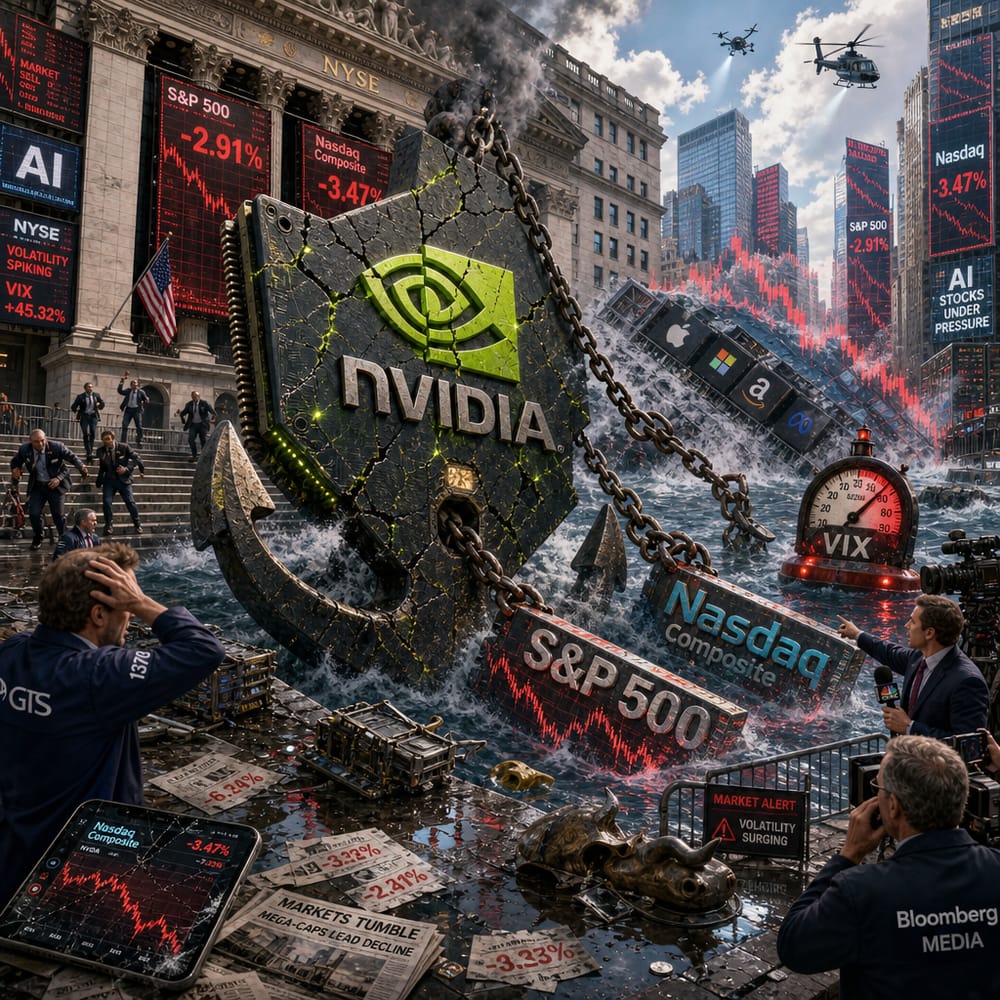
SOMETHING'S ROTTEN IN TECH LAND: THE DRAMA BEHIND NVIDIA'S SLIDE
So, you've noticed the tech titans are having a rough patch. Nvidia, once the glitzy darling of AI stocks, is now dragging the entire market down like an anchor. Picture this: the Nasdaq Composite and the S&P 500 both took a nosedive, with the tech-heavy Nasdaq dropping a hefty 2.4% and the S&P 500 sliding 1.9%. What's going on behind the scenes? Grab your popcorn, because the drama is intense.
First, let's talk Nvidia. This chip giant has been the golden child in the world of AI and data centers. But lately, it seems, Nvidia's ride isn’t as smooth as its GPUs. The big news? Former CEO and founder Jensen Huang’s sudden exit over a scandal that’s got all the ingredients for a tech thriller—allegations involving national security risks, a potential breach of trust, and the kind of personal drama that makes regulators sweat. With Huang’s leadership now shrouded in controversy, Nvidia’s stock tumbled over 4% amid uncertainty about its future course.
Adding gasoline to this fire, the United States government decided to close a loophole allowing Chinese firms to tap into Nvidia’s overseas computing resources. Not the kind of news investors like to hear. This regulatory scrutiny hits extra hard in a sector that thrives on global data flows and cross-border business.
But Nvidia's woes aren't happening in a vacuum. The entire AI sector is feeling the heat. OpenAI, another major player, is embroiled in lawsuits—yes, that's plural—with California accusing it of endangering the public. When your business involves training super-smart AI models, losing control even once can be a PR nightmare. It’s enough to put a little fear in the hearts of investors.
So, what does this all mean for the broader market? Well, the ripple effects are already visible. This significant blip in the tech sector has put mega-caps like Google, Microsoft, and Meta on high alert. When the cornerstone of your investment portfolio starts to look shaky, investors get cold feet and start seeking safe havens.
Enter consumer staples, the old reliable of the investment world. When high-growth tech stocks start looking risky, money often flows into these steady, dividend-paying stocks. Procter & Gamble and Church & Dwight, both paragons of the consumer staples sector, have hit record highs this week. It’s like investors are channeling their inner Warren Buffett, remembering his love for companies that sell products people need, no matter what.
And let's not forget about the volatility index, the VIX. It's been spiking as market jitters continue to rise. This "fear gauge" is a classic indicator that tells us traders are bracing for more turbulence. Translation: hold onto your hats.
Looking ahead, the big question is how deep and how long this tech correction might go. The AI bubble isn’t necessarily popping, but it is definitely deflating a bit. The long-term impacts could be more profound if these companies can't quickly regain investor confidence. For now, traders are jittery, and the market is reflecting that uncertainty.
Remember when tech was the superhero of the market? Well, superheroes have their off days too. Nvidia and its fellow tech giants might be down for now, but betting against them could be risky—these giants have the resources and the talent to bounce back. Plus, with upcoming IPOs like Anthropic on the horizon, there's still excitement in the tech space to keep investors on their toes.
In the meantime, don’t forget to diversify your investments. It’s the age-old advice that rings true, especially in times of market turmoil. Tech stocks might be the thrill ride of the century, but sometimes it's the reliable, mundane stocks that keep your portfolio in solid shape. So whether you're bullish, bearish, or just plain confused, stay informed, stay smart, and remember—this market may be bumpy, but it's never boring.
This article is for informational purposes only and is not investment advice. Always do your own research or consult a licensed financial professional before making investment decisions.
© Copyright 2024. All Rights Reserved.
© Copyright 2024. All Rights Reserved.