

AI ETFs vs. Individual Megacaps: Best Way to Ride AI Boom Now?
Monday, July 13, 2026
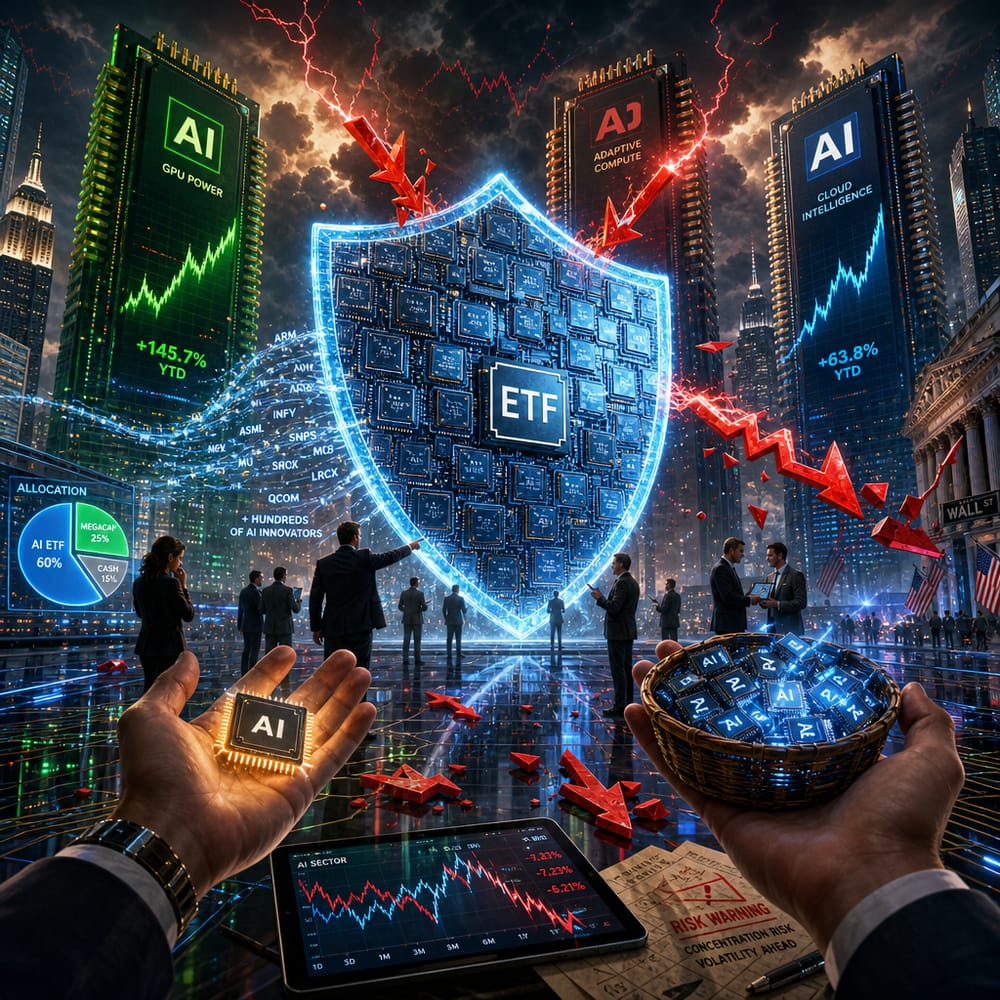
AI ETFs VS. INDIVIDUAL MEGACAPS: BEST WAY TO RIDE AI BOOM NOW?
When it comes to the AI gold rush, investors face the age-old dilemma: play it safe with a diversified ETF or go all-in on a handful of big players. In the red corner, we have AI-focused ETFs, hedged against volatility, inviting you to join the collective excitement without having to pick a winner. In the blue corner, we have the megacaps—Nvidia, AMD, Microsoft—companies with the swagger of seasoned champs ready to conquer the AI universe. So, which is it going to be, dear investor?
First, let's talk about the ETF option, often marketed as the training wheels for those who want to be part of the AI revolution without the stress of betting the farm on one or two stocks. ETFs, or exchange-traded funds, are like a smoothie of stocks, each sip giving you a taste of various companies. The idea is that if one ingredient turns sour, the others cover for it. It's risk management in a cup.
But don't go thinking ETFs are your risk-free BFF just yet. You pay for that safety net. Fees, my friend—those pesky charges that can nibble away at your returns like a mouse in a cheese factory. They tend to range from 0.05% to 1% annually, which might not sound like much, but it adds up over time, especially if the fund’s performance doesn’t keep pace. So, while the AI-focused ETF might promise you a taste of Nvidia's sky-high prospects, remember that it's not free.
Then there's the ETF composition game. You might assume "AI ETF" means you're getting pure, unadulterated AI goodness, but the reality can be a bit more kaleidoscopic. These funds often mix in non-AI stocks to stabilize returns, meaning your shiny, new AI investment might include some old-school tech dinosaurs and even a few financials. You wanted AI exposure; you got a potluck.
And let's not forget the rebalancing drag. ETFs periodically rebalance to keep their allocation in check, which can create hidden costs through trading fees and tax implications. It's like your investment taking dance lessons—necessary, but occasionally awkward and costly.
Now, switching gears to our blue-chip buddies, Nvidia, AMD, and Microsoft. These megacap stocks have been strutting their AI stuff like peacocks in a petting zoo, each boasting unique chops in AI development. Nvidia's processors are practically AI royalty, AMD is stepping up its game in the semiconductor arena, and Microsoft is weaving AI magic into its omnipresent software empire.
But, there’s a catch. Hyper-focusing your portfolio on these titans is akin to betting your entire bankroll on a single poker hand. The potential returns can be mouth-watering, but the risks are equally stomach-churning. Regulations, tech hiccups, and unexpected innovations from upstart competitors can sap momentum faster than a toddler on a sugar high.
Moreover, these companies are already carrying hefty price tags, priced to reflect their anticipated dominance. Buying shares in these companies now is like buying a ticket to a blockbuster movie well past its opening night—you'll still get a great show, but you might be sitting in the nosebleeds.
So, what's the best way to ride the AI boom? Diversification, dear reader, is like wearing a stylish yet dependable pair of shoes to a marathon. You spread your risk, you avoid the fee pitfalls by choosing low-cost ETFs, and you maintain the flexibility to pivot if the tech landscape shifts in unexpected ways. At the same time, keeping some individual stocks in your portfolio allows for those high-risk, high-reward plays, especially if you’ve done your homework and back the right horse.
In this clash of investment strategies, there’s no one-size-fits-all answer. It all boils down to your risk tolerance, investment goals, and how much you trust your own ability to spot the next big thing in AI. Whether you decide to play the AI field or bet big on a few superstars, remember: in the electrifying world of AI investments, being informed and strategic is your best defense against the market's unpredictable punches.
This article is for informational purposes only and is not investment advice. Always do your own research or consult a licensed financial professional before making investment decisions.
© Copyright 2024. All Rights Reserved.
© Copyright 2024. All Rights Reserved.