

AI Efficiency Gains Impact Semiconductor Demand
Sunday, August 02, 2026
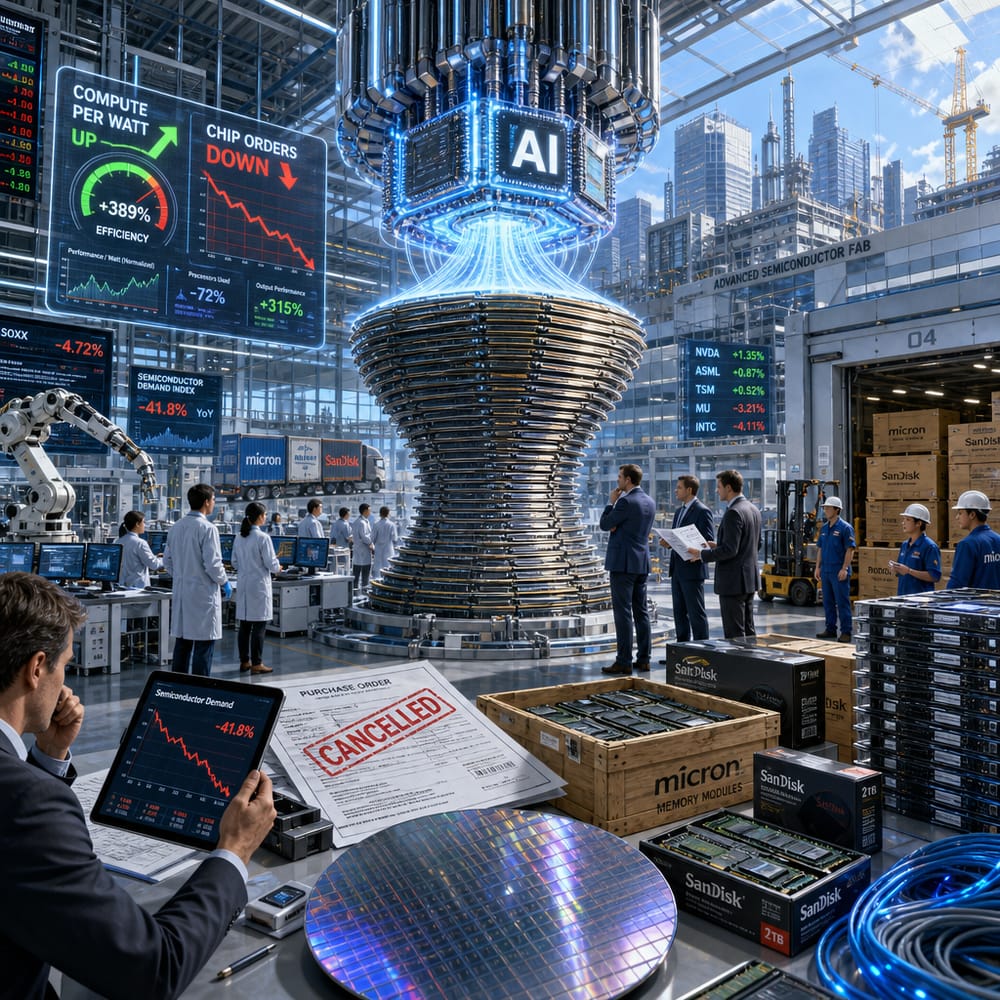
OPENAI AND META ARE CHANGING THE SEMICONDUCTOR GAME — AND HERE'S HOW
There’s a seismic shift happening beneath the surface of the tech world, and it’s not the latest iPhone model or the newest social media app. It’s in the silicon chips — the brains behind all modern technology — where the real action's happening. AI pioneers like OpenAI and Meta are teaching these chips some new tricks, and it's shaking up the semiconductor industry in ways that have tech investors paying very close attention.
First, let’s talk about the players who are rewriting the rules. OpenAI and Meta are the tech wizards you know and love (or perhaps love to hate, depending on the latest privacy scandal). These companies are going beyond just making AI smarter; they’re making it more efficient. And that efficiency? It comes at a cost to the demand for traditional semiconductors.
Think of it this way: you used to need a whole fleet of trucks to move your furniture across the country. Now, with advancements in AI efficiency, it’s like fitting all your worldly possessions into a single moving van without breaking a sweat. This means that the semiconductor giants — think SanDisk and Micron — who’ve been supplying those proverbial trucks, may find themselves with too many trucks and not enough customers.
HOW AI EFFICIENCY SHIFTS THE SEMICONDUCTOR LANDSCAPE
So, how exactly are these AI advancements impacting the semiconductor scene? Simply put, as AI gets more efficient, it requires less computational power to achieve the same, if not better, performance. This means less demand for the traditional chips that power these computations. It’s like a power-hungry rock band suddenly switching to acoustic sessions — great for energy bills, but not-so-great if your business relies on amplifiers.
This reduction in demand for traditional chips is not just a fleeting trend. As AI continues to evolve and become more efficient, the market for high-performance, energy-intensive chips could shrink. Semiconductor companies suddenly find themselves in a scramble, needing to pivot or innovate to stay relevant.
Micron and SanDisk aren’t closing up shop just yet, though. These companies are making moves, exploring new markets, and investing in next-gen technologies to ensure they aren’t left in the dust. But with OpenAI and Meta accelerating their AI advancements, the pressure is very much on.
THE LONG-TERM IMPACT ON SEMICONDUCTOR COMPANIES
If you think this shift will only affect the tech sector, think again. The ripple effects could be vast. For starters, a change in semiconductor demand could influence tech investments. Investors who’ve been pouring money into semiconductor stocks based on past performance might need to reassess their strategies.
With less demand for traditional chips, companies could face reduced revenue streams, leading to potential downsizing or reallocation of resources. However, this could also push these companies to innovate more aggressively, sparking a new wave of technological advancements. The semiconductor industry has always been one where innovation is the lifeblood, and this shift might just be the jolt it needs to evolve further.
For retail investors—those of you casually scrolling through stock updates on your lunch break—this means being more discerning with your tech investments. The big players in the semiconductor game might not be the sure bets they once were. Instead, it’s time to look out for those companies that are adapting to the AI efficiency revolution or investing in new tech to offset the decline in traditional chip demand.
THE FUTURE OF TECH INVESTMENTS
What does this all mean for your portfolio? Well, it might be time to diversify. Investing in companies on the cutting edge of AI advancements, like OpenAI or Meta, could be a wise move. Alternatively, looking into semiconductor companies that are pivoting towards more efficient solutions or new markets could also yield positive returns.
Staying informed is key. The landscape is shifting rapidly, and being aware of these changes will keep you one step ahead. So keep your eyes peeled for the next quarterly reports from these industry players and consider the broader impact of AI efficiency on your investments.
This is not just another tech trend—it's a fundamental change in how our digital world operates. And while the full impact of AI efficiency on the semiconductor industry is yet to be seen, one thing's for sure: the tech landscape is evolving, and it’s going to be one heck of a ride. Buckle up, stay informed, and let’s see where this tech rollercoaster takes us.
This article is for informational purposes only and is not investment advice. Always do your own research or consult a licensed financial professional before making investment decisions.
© Copyright 2024. All Rights Reserved.
© Copyright 2024. All Rights Reserved.