

AI-Driven Price Pressures Highlighted by San Francisco Fed's Mary Daly
Friday, October 09, 2026
AI-Driven Price Pressures Highlighted by San Francisco Fed's Mary Daly
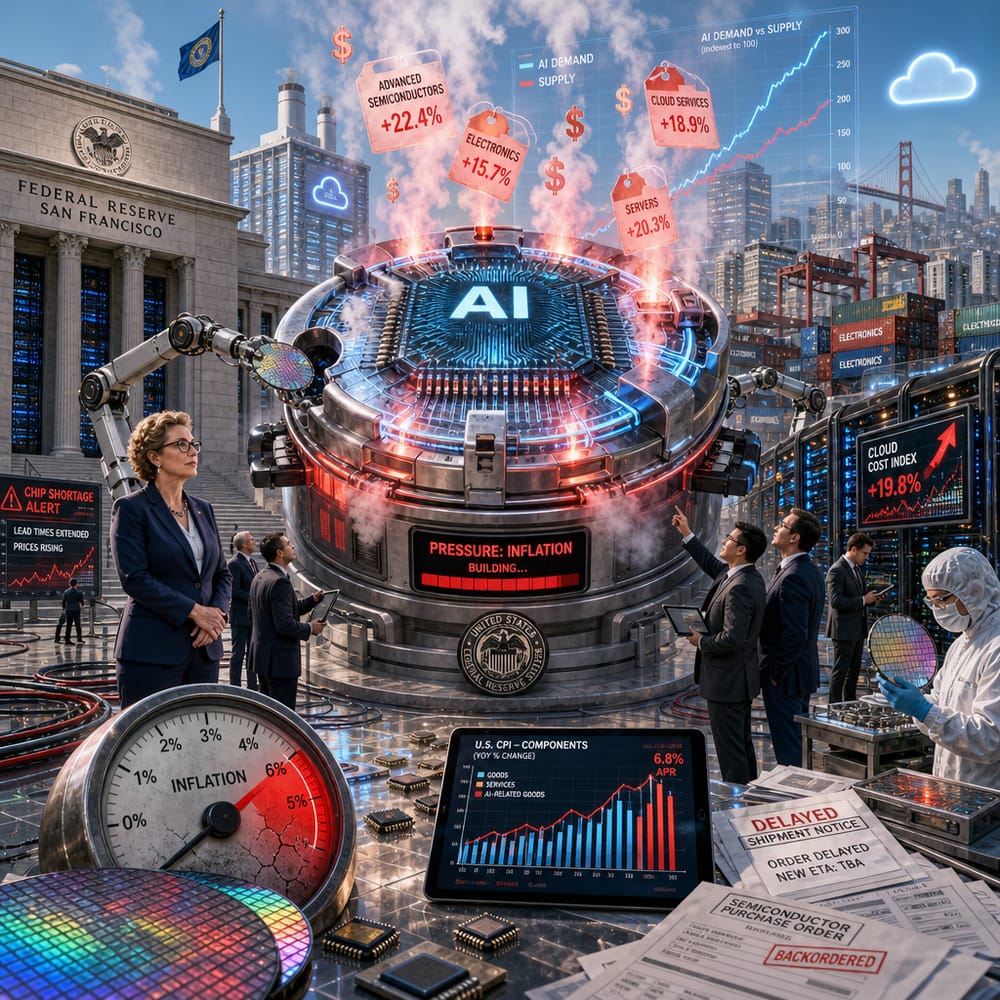
Mary Daly isn't screaming "the sky is falling!" with a chicken little hat on, but she's got some sage advice that’s worth your attention. The San Francisco Fed President recently threw a spotlight on a potential new pressure point in our economic landscape: artificial intelligence sparking chip shortages, which, funnily enough, could lead to the next chapter in our inflation saga. Yes, you heard it right—our friendly neighborhood AI might mean more than just your phone suggesting a great cat meme.
Daly’s concern adds a unique twist to the inflation narrative, one that’s no longer just about energy prices or Russia’s latest moves. Instead, we’re talking about semiconductors, the unassuming silicon lifeblood that makes everything from your smartphone to your smart car get up in the morning.
If you think back to econ class, you might remember that inflation is the rise in prices for goods and services—essentially, your money buys less over time. But, typically, we’re used to hearing about oil or housing as the usual inflation suspects. Now, though, with AI nibbling away at the edges, we're venturing into a whole new ball game.
Let's start by taking a stroll down Semi Lane, where the heart of this story lies. Semiconductors are those tiny chips that power pretty much every gadget you use. They’ve become the crème de la crème of tech, thanks to AI needing a vast number of them to keep chugging along. But as AI accelerates, demand for these chips is skyrocketing faster than you can say "Moore's Law," creating a bottleneck with the potential to send prices northward.
SECTORS MOST VULNERABLE
So, which sectors should be biting their nails over this AI chip crunch? Well, for starters, any tech-dependent industry is on the hot seat. Think electronics, cloud computing, and the broad tech sector that fuels everything from streaming your latest binge-watch to virtual reality escapades. These sectors might just find themselves paying a premium for the silicon magic they’ve become reliant on.
It's not just tech that needs to stay sharp, though. The ripple effect of semiconductor shortages can stretch far and wide. Automakers, for instance, have already experienced chip shortages, stalling production lines and trimming their inventory. Imagine the knock-on effect if every car-gadget imaginable suddenly became more expensive. Your new electric vehicle might just come with a price tag that’s a little more shock and a lot less awe.
THE FED'S RESPONSE
Now, let's pivot to the beat of monetary policy. What might the Fed do in response to AI-driven price pressures? Well, forward guidance—the Fed's way of signaling where they think interest rates are going—could become a little more complex. If chip shortages inflate prices in critical sectors, the Fed might have to engage in some monetary gymnastics.
Interest rates, which the Fed uses to control inflation, could face upward adjustments sooner than expected. Keeping inflation in check while not strangling economic growth is a delicate dance, akin to balancing a see-saw with a bowling ball on one end. The Fed may have to navigate this new inflationary environment with more agility, while also keeping a keen eye on how tech-sector developments influence broader economic dynamics.
WHAT YOU SHOULD WATCH
As an investor, what should you be watching for in this tangled web of chips and AI? Keep an eye on semiconductor stocks—they’ve been the hot ticket lately and could continue to be star performers if supply issues persist, driving prices higher. Companies like Nvidia and AMD could be your canaries in the coal mine, signaling broader market trends.
The influence of AI on inflation isn't just a headline, it's a front-row seat to a new economic landscape where technology influences prices beyond what we traditionally expect. The key takeaway? Stay informed, keep a pulse on tech developments, and remember that navigating inflation isn't just about oil prices or housing markets anymore—it’s also about AI, and the tiny chips that keep the digital world spinning.
Mary Daly's not sounding an alarm, but she’s definitely ringing a bell that we should all be hearing. As AI continues to evolve, understanding its broader economic impact might just be the best move you make all year. So keep your eyes sharp and your portfolio ready; the world of finance is moving fast, and you don't want to be left holding the bag—or in this case, the out-of-date chip.
This article is for informational purposes only and is not investment advice. Always do your own research or consult a licensed financial professional before making investment decisions.
© Copyright 2024. All Rights Reserved.
© Copyright 2024. All Rights Reserved.