

AI Data Center Stocks Slide as Bond Yields Rise
Friday, August 21, 2026
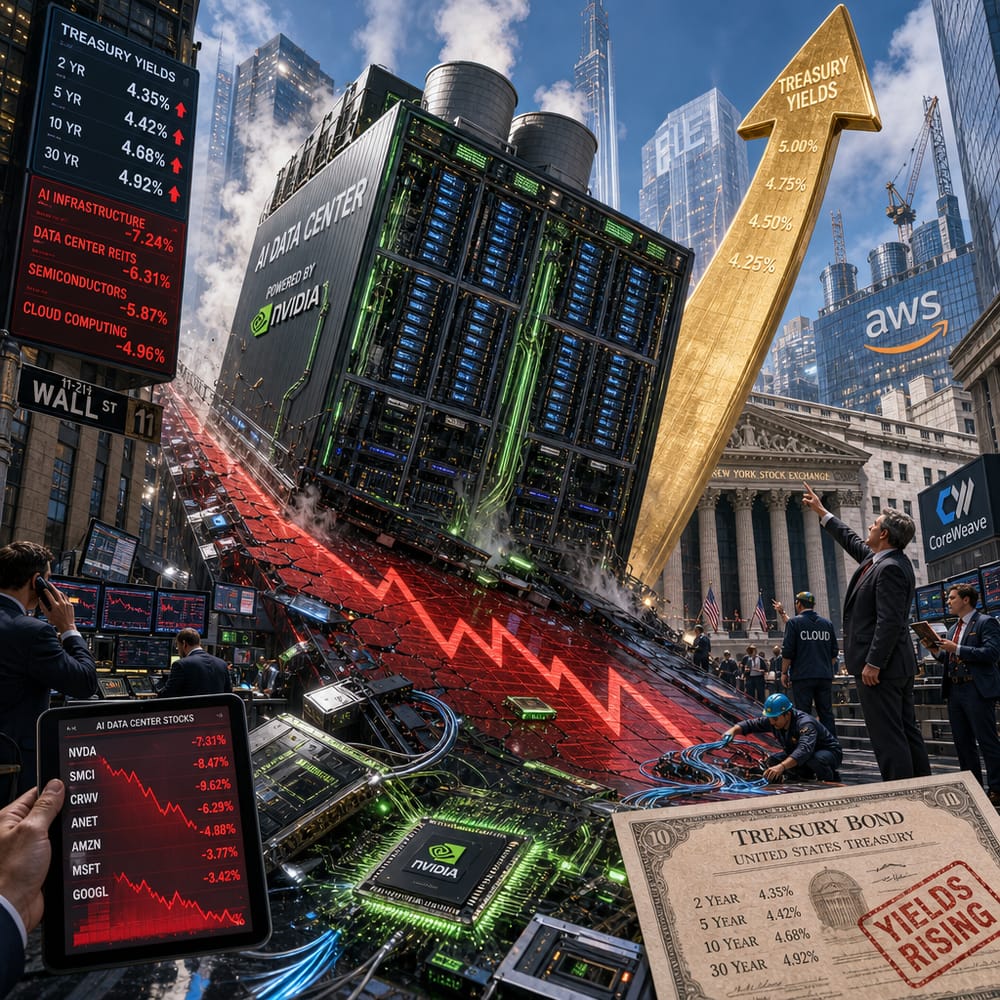
AI DATA CENTER STOCKS SLIDE: A TALE OF RISING YIELDS AND SHIFTING INVESTMENTS
Picture this: Wall Street is teeter-tottering like a clumsy circus act, with AI data center stocks plummeting gracefully from the high wire. Investors, once dazzled by the glitzy appeal of artificial intelligence infrastructure, are now eyeing the exits, but why? Well, folks, let’s talk about the elephant in the room — rising bond yields.
If you're wondering why your AI-heavy portfolio is starting to look like a soufflé that didn't rise, you're not alone. The blame game today points squarely at the bond market, where yields are strutting upward like they've had one too many espressos. Treasury yields, particularly on longer-dated bonds, have been climbing, and this spells trouble for tech darlings and their ambitious plans for expansion.
But first, let's get back to basics. Yields are essentially the returns that investors demand for holding onto bonds, and they tend to wiggle in the opposite direction of bond prices. So when yields increase, borrowing costs do too. For tech companies, this is the equivalent of a rude wake-up call that their future plans might need a serious tweak.
Now, why exactly does this matter to our data center stocks? Companies like Nvidia, a titan in the GPU space, and CoreWeave, a rising star in cloud infrastructure, rely heavily on significant capital to build their sprawling AI data centers. These centers are not your average office cubicles; they're supercharged tech fortresses packed to the brim with high-performance computing gear.
The problem emerges when financing these tech castles becomes pricier. Rising bond yields effectively crank up the cost of borrowing. If you're a tech company thinking of expanding your AI infrastructure, your cost-benefit analysis just got complicated. Suddenly, every dollar borrowed to fund that shiny new data center could cut deeper into your bottom line.
Let's put some names to these headaches. Nvidia, whose chips are the beating heart of many AI systems, is feeling the heat. In the world of AI, they’re the rock stars whose concerts are getting harder to finance. Meanwhile, CoreWeave, which has been flexing its muscles to grab a bigger slice of the cloud pie, might find its expansion playlist getting a bit shorter.
Even Amazon Web Services, the elder statesperson in the cloud world, isn't immune. As they juggle a zillion priorities, rising capital costs might force them to rethink which tech gigs to play next.
Sure, there are whispers about how AI remains the future, but when the rubber meets the road, the calculus for these companies has changed. The big question now is: will they slow down on their infrastructure investments, or find slick new ways to keep the band playing without busting the bank?
In the meantime, retail investors, perhaps you, sitting there scrolling your phone, need to ponder the implications. Are AI data centers, once a staple in a bullish tech portfolio, going to deliver the same returns? Or will rising yields and slimming margins make them look like a bad hangover from a tech party?
Of course, this isn't a "tech is doomed" prophecy. It’s more of a “tech needs to stretch before the big game” moment. The companies most affected by these trends are likely those with aggressive expansion plans funded heavily by debt. While innovation and AI's promise are as enticing as ever, the financial landscape is shifting, and these companies will need to adapt or find themselves playing catch up.
For you, the savvy, smartphone-scrolling investor, the trick is to stay informed. Keep an eye on those bond yields and watch how tech behemoths and startups navigate the choppy waters. The ride might get bumpy, but understanding the lay of the land will help keep your investment ship steady. After all, in the world of finance, the only constant is change — and that's the thrill of the game.
This article is for informational purposes only and is not investment advice. Always do your own research or consult a licensed financial professional before making investment decisions.
© Copyright 2024. All Rights Reserved.
© Copyright 2024. All Rights Reserved.