

AI Capex Falters: UBS Sees Spending Slowdown Among Hyperscalers
Monday, November 23, 2026
AI CAPEX FALTERS: UBS SEES SPENDING SLOWDOWN AMONG HYPERSCALERS
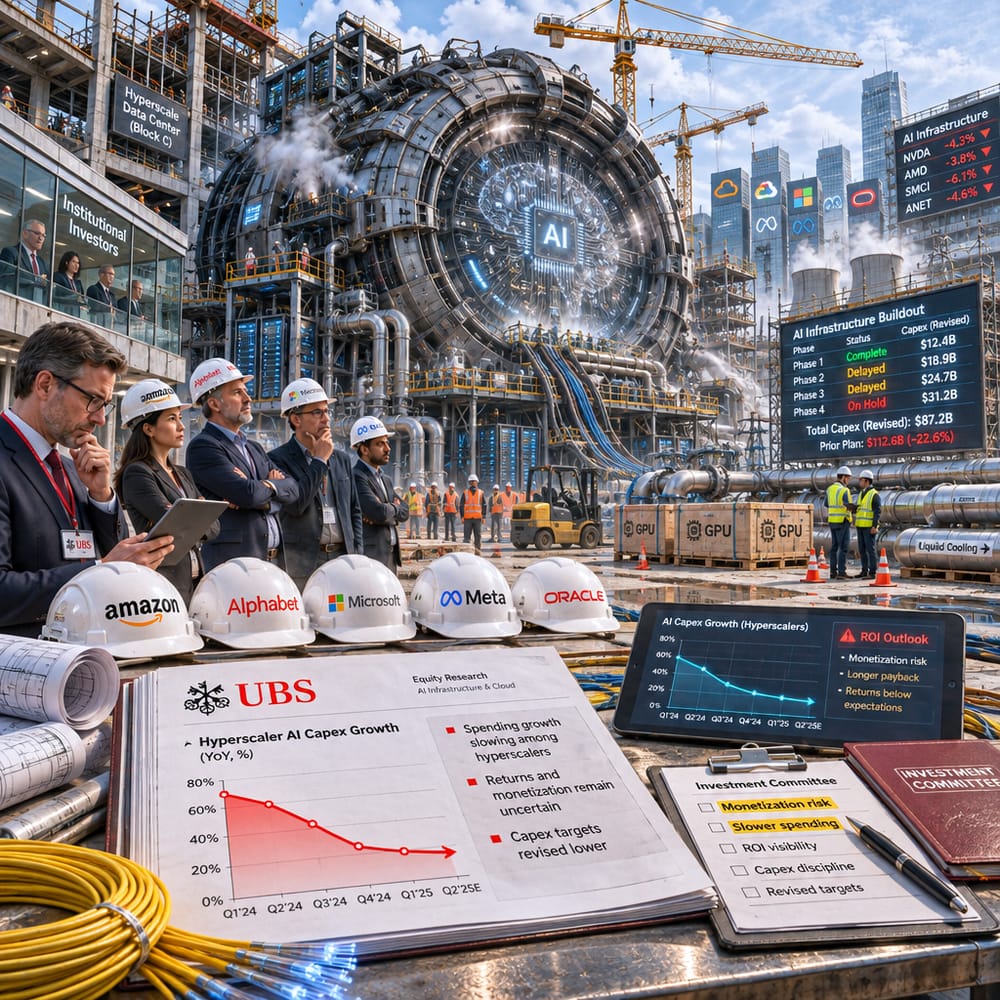
Buckle up, investors — the party in hyperscale AI spending might be winding down. Imagine you've got your foot slammed on the accelerator, and suddenly, you need to ease off. That's exactly what UBS says is happening with the titans of the cloud world. Amazon, Alphabet, Microsoft, Meta, and Oracle — the über-rich kids of the tech block — are reportedly tapping the brakes on the massive cash dumps they’ve been funneling into AI-related capital expenditures (capex). But why now?
After a whirlwind of AI hype, sprinkled with promises of world domination, the shine is starting to wear thin. It's not that the tech giants are tossing AI to the curb — far from it. They're merely adopting a "let's not burn cash like it's going out of style" approach. UBS points out that these giants are getting a little more cautious about their spending. When you’ve been throwing billions around like confetti, even a slight pullback can send ripples through the entire tech pond.
So, what's driving this slowdown? Part of it boils down to a classic case of ROI — return on investment, if we’re speaking the Queen’s English. The tech leaders are starting to notice that while AI brings innovation and headlines, translating those into cold, hard cash isn't as straightforward as it seemed in the glossy pitch decks. There's also the looming specter of economic uncertainties and market volatility, making even the boldest tech executives break into a cautious sweat.
As these hyperscalers curb their wild spending, the ripple effects are bound to echo through their sprawling ecosystems. First off, brace yourselves for potential tremors in the semiconductor sector. Companies like Nvidia, which have been riding the AI wave, could feel a chill in their sizzling sales. For all the drama surrounding Nvidia's CEO reinstatement (a soap opera worthy of its own Netflix series), the slowdown in AI spending might be the real cliffhanger.
And let’s not forget the hardware makers — they've been living large, thanks to the demand for servers and other tech toys needed to power AI. A dip in demand from the biggest cloud players could have them scrambling to find new playgrounds.
But it's not just the suppliers of silicon and metal that need to watch their backs. The broader tech industry, including enterprise software and data analytics, might find itself navigating choppier waters. With AI's shine slightly dulled, investor attention could pivot back to good old profitability — a quaint concept that's been somewhat overshadowed by the AI fireworks in recent years.
Investors, by their very nature, are a twitchy bunch. When cloud kings like Amazon or Microsoft start hinting that they're tightening their belts, the market listens. The allure of sky-high growth projections might give way to a renewed focus on solid balance sheets and profitable business models. In other words, the market could start rewarding companies that actually turn a profit — imagine that!
So, where does this leave the average retail investor? Well, it's a delicious moment to reassess your tech-heavy portfolios. While AI isn't going away, the days of unchecked exuberance might be behind us. Keep an eye on how these companies shift their strategies. Will they double down on squeezing more juice out of existing investments, or will they pivot to new growth avenues like Quantum Computing or Renewable Energy?
The bottom line? The AI wonderland isn't closing its doors, but the entry fee might just be getting a little steeper. As you ponder your next investment move, remember the timeless rule: when one door closes, another opens. Just make sure you're ready to walk through it.
In the meantime, stay informed, stay nimble, and maybe, just maybe, think about that dusty old concept called profitability. It might just be making a comeback.
This article is for informational purposes only and is not investment advice. Always do your own research or consult a licensed financial professional before making investment decisions.
© Copyright 2024. All Rights Reserved.
© Copyright 2024. All Rights Reserved.