

Ag-Equipment Stocks Slump After U.S. Regulatory Inquiry
Thursday, October 08, 2026
WHAT'S THE DIRT WITH AG-EQUIPMENT STOCKS?
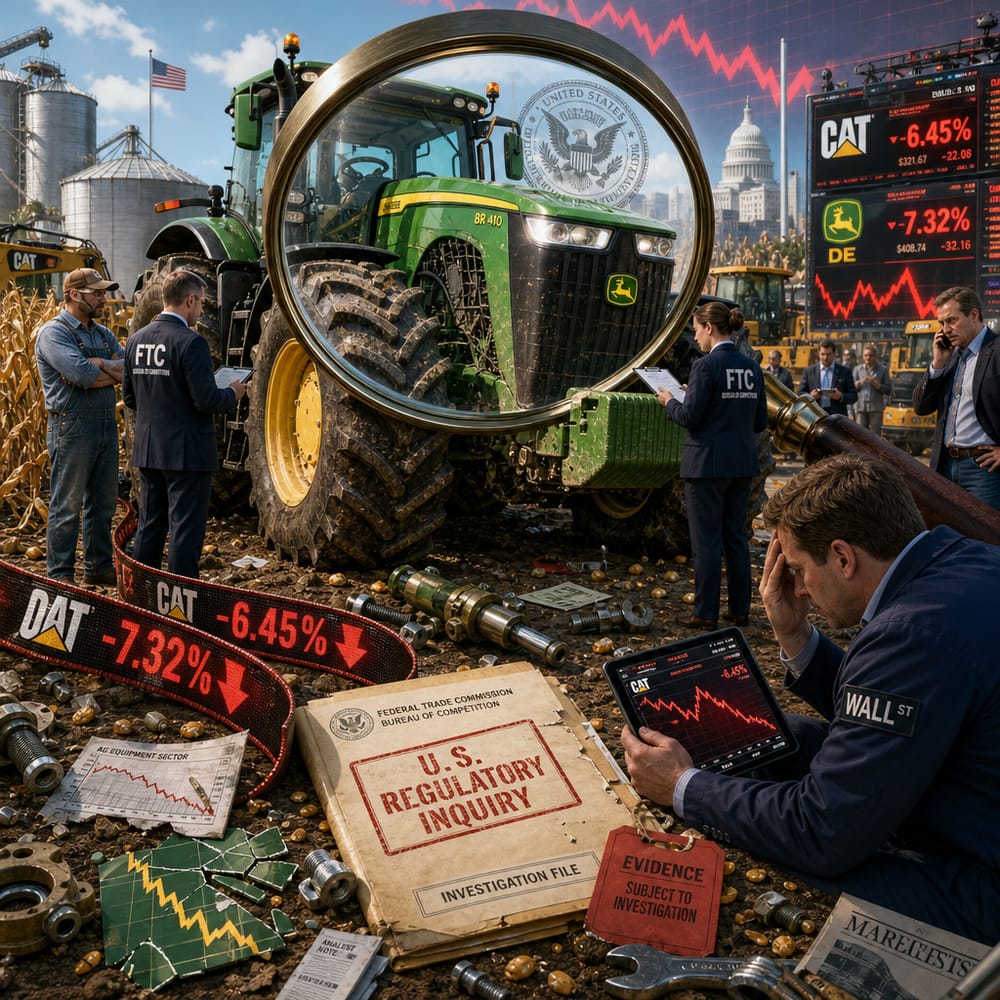
Hold onto your hats, folks—agriculture is getting spicy. Caterpillar and Deere & Co., the titans of tractor town, have hit a rough patch after Uncle Sam decided to look under the hood. That's right, a regulatory inquiry is sniffing around like a bloodhound, investigating potential anticompetitive practices in the agricultural equipment sector. So, what does this mean for investors? Is it time to sell the farm or buy the dip?
The news isn't just a hiccup—it's a full-on bellyache for these stocks. Both Caterpillar and Deere saw their stock values take a nosedive following the announcement. For investors, it’s like finding out your favorite tractor has been replaced by a rusty old mule. But before you panic-sell, let’s dig a little deeper.
POTENTIAL OUTCOMES AND IMPACT
When regulators roll up their sleeves, the outcomes can vary more than the weather in Kansas. On the optimistic side, the investigation might blow over with minimal penalties. On the flip side, if anticompetitive practices are confirmed, we could see fines, regulatory changes, or even mandatory restructuring to foster more competition.
The broader ag-equipment market might feel the tremors too. Regulatory scrutiny tends to cast a long shadow, making investors wary and potentially driving down valuations. But there’s a silver lining: increased competition could spark innovation and bring new players into the field, making things lively.
HISTORICAL PRECEDENTS
This isn’t the first time big industry names have faced regulatory heat. Remember when Microsoft was the big, bad monopoly back in the late '90s? After a lengthy court battle, they were forced to change their ways. The result? Well, Microsoft survived and even thrived post-regulation. In fact, some analysts argue that the scrutiny helped them diversify, paving the way for new product lines and a healthier market.
So, what’s the takeaway for the ag-equipment sector? If history repeats itself, a little regulatory heat might just get the innovation wheel turning faster. Imagine more efficient, eco-friendly machinery rolling out of the factories because competitors are trying to outdo each other in a newly balanced playing field.
BUYING OPPORTUNITY?
Now, here's the million-dollar question: Are these slumped stocks a bargain or a money pit? It’s a tough call, but here's a thought—if you’re playing the long game, this could be your moment. Stocks often rebound after regulatory hiccups, especially if the long-term fundamentals remain strong.
Caterpillar and Deere & Co. are entrenched in the global market with strong brand recognition and established infrastructure. If the inquiry leads to improvements in industry practices, these giants could emerge stronger and more efficient. Think of it as a rigorous workout—painful in the short term but beneficial in the long run.
KEEPING AN EYE ON THE MARKET
For those still deciding, it's crucial to keep an eye on further developments. What comes out of this inquiry will be key. Are regulators finding smoking guns, or is it just a formality? Watch for any official announcements, as well as industry analyst takes, which can provide insights into market sentiment.
And let’s not forget the broader economic landscape. With Treasury yields climbing and oil prices jumping like a kangaroo on espresso, market conditions are already volatile. How these factors interact with regulatory changes in the ag-equipment sector will be something to watch.
THE BOTTOM LINE
For now, let’s hold off on calling the farm auctioneer. Regulatory inquiries can be rocky, but they’re part of a market’s ecosystem. It’s a cycle of accountability and adaptation. If you’re looking at the bigger picture, Caterpillar and Deere might just be getting ready for their next act. Keep your wits about you, watch the developments, and maybe—just maybe—you’ll find a golden plowshare in this field of opportunity.
This article is for informational purposes only and is not investment advice. Always do your own research or consult a licensed financial professional before making investment decisions.
© Copyright 2024. All Rights Reserved.
© Copyright 2024. All Rights Reserved.