

A Deep Freeze Is Stress-Testing the U.S. Energy Trade
Monday, January 26, 2026
Natural Gas Takes Center Stage
A powerful winter storm sweeping across large parts of the US is putting the energy system under real strain, and markets are paying attention. Natural gas prices have surged at a historic pace, jumping roughly seventy percent in less than two weeks as traders brace for supply disruptions. The concern isn’t demand — it’s how much production and transport capacity could go offline as extreme cold grips key regions.
Frozen Infrastructure Raises the Stakes
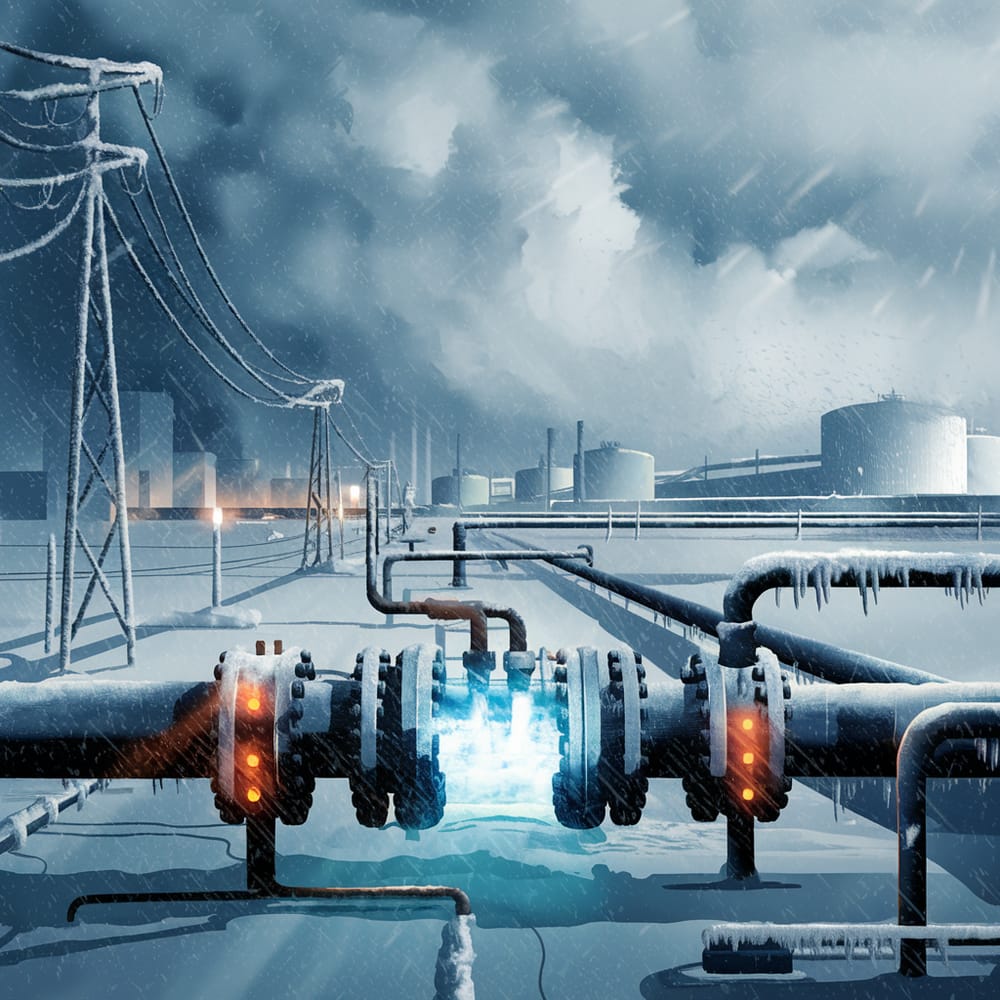
Cold weather isn’t just uncomfortable — it’s operationally dangerous for energy systems. Natural gas production contains moisture, equipment relies on electricity, and pipelines don’t function well when power is lost. As temperatures plunge, even small outages can ripple quickly through supply chains, turning weather forecasts into market-moving events almost overnight.
Pipelines and Utilities Are in the Spotlight
Beyond producers, attention is shifting to pipelines and utilities exposed to the storm’s path. Heavy snow and ice increase the risk of power outages, some potentially lasting days. For utilities, the challenge is twofold: keeping the lights on while operating under intense public and regulatory scrutiny. Performance during storms like this can shape long-term perceptions around grid reliability.
Exports Add Another Layer of Risk
Liquefied natural gas exporters are also watching closely. Any slowdown in gas flow or power disruptions could temporarily limit shipments, even as global demand remains strong. With cold weather boosting consumption not just in the US but across Europe as well, the pressure on American energy infrastructure is intensifying at a moment when reliability matters most.
Why the Market Is Looking Past the Storm
While the immediate focus is on this week’s weather, investors are thinking further ahead. Extreme cold events are reinforcing a bigger theme: the need for investment in energy resilience. Short-term price spikes may fade, but storms like this tend to leave a lasting mark on how markets value producers, pipelines, and the grid itself.
© Copyright 2024. All Rights Reserved.
© Copyright 2024. All Rights Reserved.