

Active ETF Inflows Surge — Winners & Lagging Fund Managers
Saturday, August 22, 2026
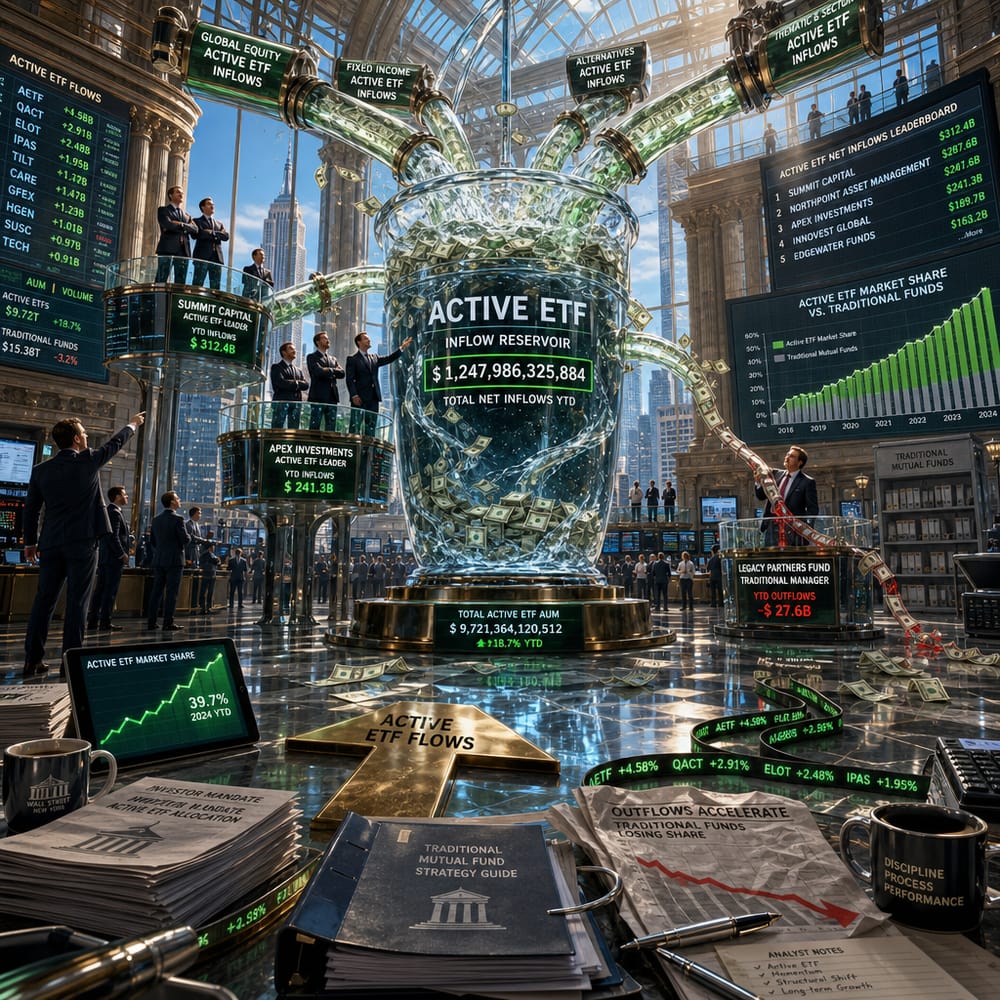
ACTIVE ETFS ARE THE TALK OF THE TOWN—AND HERE'S WHY YOU SHOULD CARE
Once upon a time, passive investing was the rockstar of the investment world, promising low costs and market-mirroring returns. But lately, a new trend has sashayed into the spotlight, and it's commanding investor attention like never before. Active ETFs are taking the stage, and they aren't holding back.
Have you heard? Active ETFs now gobble up 42 cents of every dollar flowing into ETFs, according to The Motley Fool. That's a dramatic leap from their 26-cent share in 2024. If active ETFs were a band, they'd be playing sold-out shows every night. So, what's with the growing fan base?
For starters, active ETFs offer a blend of hands-on management with the nimbleness and tax efficiency of an ETF. They're the slick new hybrid that's turning heads, and folks are paying attention. Investors are drawn to these funds for the potential of beating the market, not just following it. And let’s be honest—who doesn’t like a little bit of excitement in their portfolio?
The big players in the asset management world are scrambling to catch this wave. BlackRock, JPMorgan Chase, T. Rowe Price, and Franklin Templeton are all warming up to active ETFs like a trendy new diet. They're all in, cooking up products that cater to this hot demand. For these finance giants, it’s adapt or get left behind on the dusty shelves of investment products past.
But not everyone’s having a party. Traditional mutual funds might want to sit down for this one. They’ve been the old guard, the mainstay in many portfolios, but their time in the sun might be fading. If they don’t shape up and get with the ETF program, they risk becoming yesterday's news. “Pivot or perish” is the new mantra for these asset managers.
So, what are the numbers saying? Well, it’s not just hype. Money talks—and it’s talking loudly. More investors are opting for actively managed ETFs, which means capital that previously flowed into bargain-bin passive funds is now finding its way to active managers. It's a shake-up, a redistribution of wealth that has everyone from Wall Street to Main Street paying attention.
And what might the long-term impacts be? The possibilities are as dynamic as the funds themselves. For one, asset managers who miss the active ETF train may find themselves facing shrinking assets and slimmer margins. A shift towards active management could also encourage more innovation in investment strategies, as fund managers strive to outperform and offer unique value propositions.
But what does this mean for you, the retail investor? If you've been sticking to the same old investment tracks, it might be time to explore the active ETF scene. They offer the potential for higher returns, albeit with higher risk, as you're betting on fund managers to outsmart the market. Think of it as investing with a personal trainer instead of going it alone on the treadmill.
In conclusion, active ETFs are more than just a passing fad; they're a seismic shift in the way we think about investing. As they continue to capture more inflows, they could reshape the asset management industry, pressuring traditional players to evolve or exit. For investors, this could open up new opportunities, but with the usual caveat: do your homework, know your goals, and invest wisely.
Whether you're a passive purist or an active aficionado, one thing's for sure—the ETF landscape is changing, and it's changing fast. So keep your eye on those inflow figures and stay tuned, because this investment story is far from over.
This article is for informational purposes only and is not investment advice. Always do your own research or consult a licensed financial professional before making investment decisions.
© Copyright 2024. All Rights Reserved.
© Copyright 2024. All Rights Reserved.