

Accenture Just Had Its Worst Day Ever — and AI Is the Villain
Monday, June 22, 2026
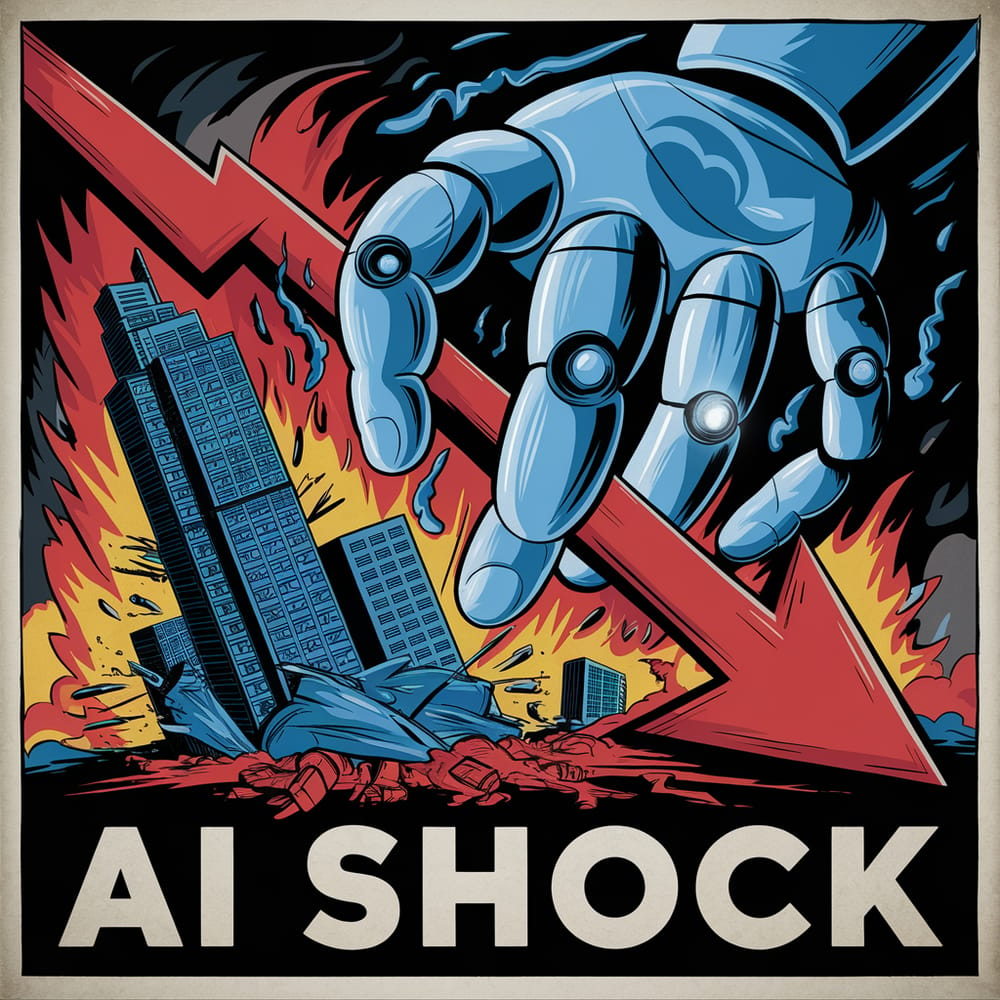
Accenture is one of the bluest of blue-chip stocks — a $200-billion consulting giant that helps the world's biggest companies modernize. So when its shares cratered roughly 18% on Monday, the worst single-day drop in the company's history, investors paid attention. The strange part? The actual quarter was solid. The crash was about fear of the future, and the future has a name: artificial intelligence.
A Good Quarter That the Market Hated
On the surface, Accenture's fiscal third quarter looked healthy. Earnings per share grew about 9%, operating margins expanded, and the company threw off $3.6 billion in free cash flow in just three months. Management even nudged up the low end of its full-year profit guidance. By almost any normal yardstick, this was a beat — and the stock still got demolished.
The Guidance Cut That Spooked Everyone
The damage came from one line: revenue guidance. Accenture trimmed its full-year fiscal 2026 local-currency revenue growth forecast to 3%–4%, shaving the top off its prior 3%–5% range. On Wall Street, a haircut to the top end signals slowing momentum, and momentum is everything for a stock priced for steady growth. That small revision was enough to erase tens of billions in market value in a matter of hours.
Three Reasons Behind the Slowdown
Management pointed to three culprits. First, a roughly $100 million headwind tied to the conflict in the Middle East. Second, clients pushing large managed-service contracts out into fiscal 2027 instead of signing now. Third, ongoing weakness in U.S. federal consulting as government budgets tighten. None of those alone is fatal — but stacked together, they paint a picture of customers hesitating.
The AI Paradox at the Heart of It
Here's the twist that has investors most rattled. Accenture said AI work is growing fast as a share of its bookings — but not fast enough to offset softness everywhere else. And there's a deeper worry: if AI lets Accenture do the same projects faster with fewer consultants, clients may simply need fewer billable hours. The very technology Accenture sells could shrink the bill it sends. That's the existential question hanging over the entire consulting industry.
What It Means for Retail Investors
After the plunge, Accenture trades at a forward price-to-earnings ratio near 10 — cheap by its own historical standards and bargain territory for a company still generating billions in cash. Bulls call that a gift; bears say it's a value trap if AI keeps eating into demand. The selloff also dragged peers like IT-services rival EPAM lower, a sign the market is repricing the whole "people-for-hire" consulting model, not just one name. For now, Accenture has become the clearest test case of whether AI is a tailwind or a threat to the businesses built on human expertise.
This article is for informational and educational purposes only and does not constitute investment advice. Always do your own research and consult a licensed financial professional before making investment decisions.
© Copyright 2024. All Rights Reserved.
© Copyright 2024. All Rights Reserved.