

a16z Launches $1.1B “Machine Age” Fund to Build AI Physical Infrastructure
Saturday, August 29, 2026
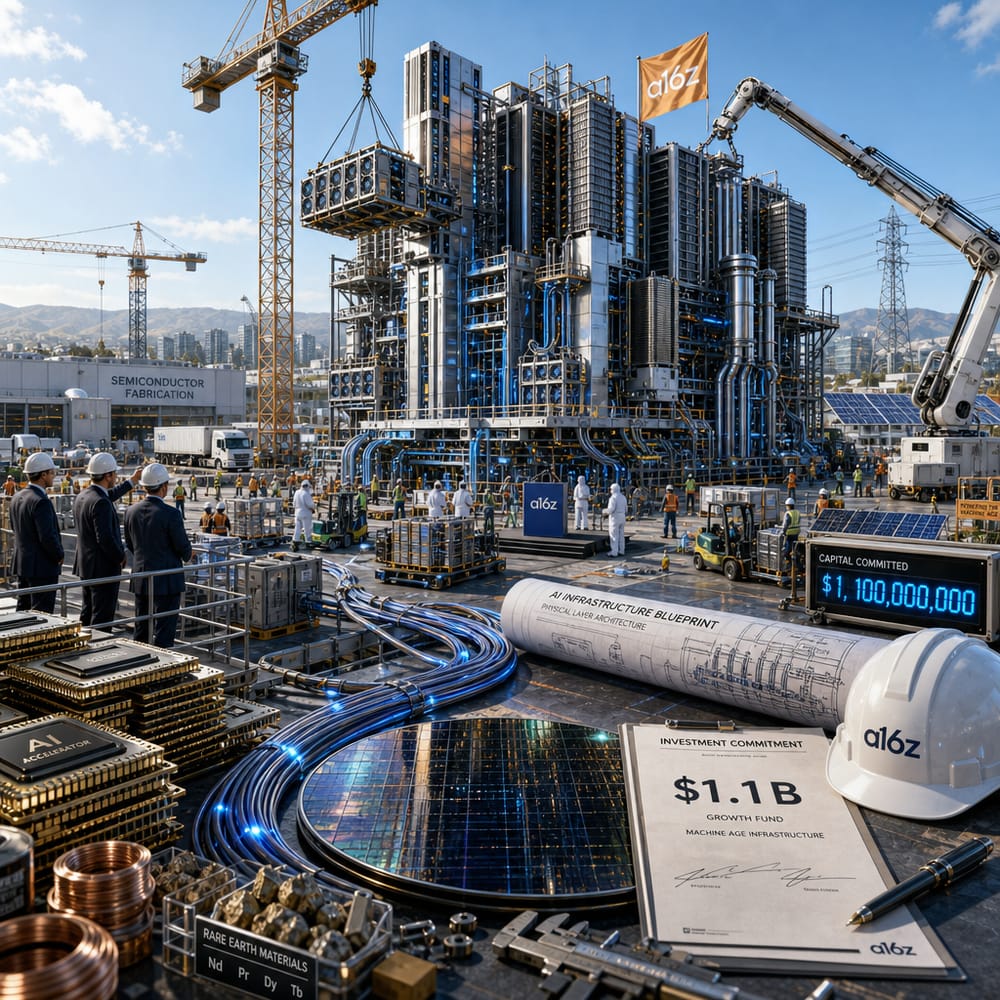
When Andreessen Horowitz bets big, it’s time to sit up and take notice. This time, they’re throwing a cool $1.1 billion into what they’re calling the “Machine Age” — but hold on to your silicon chips, because this isn’t about the latest smartphone app. No, this is about the gritty physical stuff: the nuts and bolts of AI infrastructure. Think chips, memory, and networking gear. It’s the skeleton of AI, and a16z wants to give it a massive upgrade.
AI, or artificial intelligence if you’re formal, has been the darling of Silicon Valley for years, but the conversations have mostly swirled around flashy software applications. So why the sudden shift to the less-than-sexy world of hardware? Simple. The AI industry is hitting a roadblock, and it’s not a software problem. It’s a physical one. It's like owning a race car but having it rust on the driveway because you forgot to build a garage.
The sharp minds at Andreessen Horowitz have spotted the bottleneck: without beefier infrastructure, AI progress could stall. The hardware needs to catch up if we expect AI to keep making those jaw-dropping leaps. And let's face it, without the right support system, even the most sophisticated AI has all the potential of a smartphone running on 2005’s brick-sized battery.
Imagine a bustling kitchen with brilliant chefs ready to whip up a feast but limited to a single stove burner. That’s AI today without the necessary hardware infrastructure. By targeting the guts of the operation — the chips, memory, and networking capabilities — a16z is essentially saying, “Let’s build a kitchen these superstar chefs deserve.”
But what does this mean for the timeline of AI development? In the short term, we could see a flurry of activity in the hardware sector as companies scramble to get a piece of that $1.1 billion pie. In the long run, more robust infrastructure could accelerate AI advancements, ushering in a new era of AI capabilities that could make today's tech look like yesterday's Tamagotchi.
Now, here's where it gets juicy. With a16z’s announcement, expect competition among AI hardware providers to heat up. Think of it like the start of the space race — but with chips and circuits instead of rockets. New players will undoubtedly enter the fray, and existing companies will have to hustle hard to innovate or risk becoming obsolete. This could lead to a seismic shift in the AI hardware landscape, with fresh faces challenging the big names that have long dominated the scene.
But before you start imagining Terminators walking down Main Street, let's talk about the implications for investors — that's you folks scrolling through this on your lunch break. If you’re looking to dive into the hardware side of AI, this could be your golden ticket. While AI software has had its fair share of IPO darlings, the hardware realm is poised for its spotlight moment. Investors who can see the value in the nuts and bolts might just find themselves ahead of the curve.
In the end, a16z’s pivot to hardware is more than just a change in strategy; it’s a bold statement about the future of AI. As investors, it's time to check your portfolios, see where your chips are stacked, and maybe think about sliding a few toward AI infrastructure. Because as the landscape shifts, those who spot the opportunity early might just cash in on the next big thing in tech’s evolution. Welcome to the Machine Age, folks. It’s going to be one heck of a ride.
This article is for informational purposes only and is not investment advice. Always do your own research or consult a licensed financial professional before making investment decisions.
© Copyright 2024. All Rights Reserved.
© Copyright 2024. All Rights Reserved.