

10-Year Treasury Yield Hits Highest Since 2007, Reviving Rate Hike Debate
Tuesday, September 29, 2026
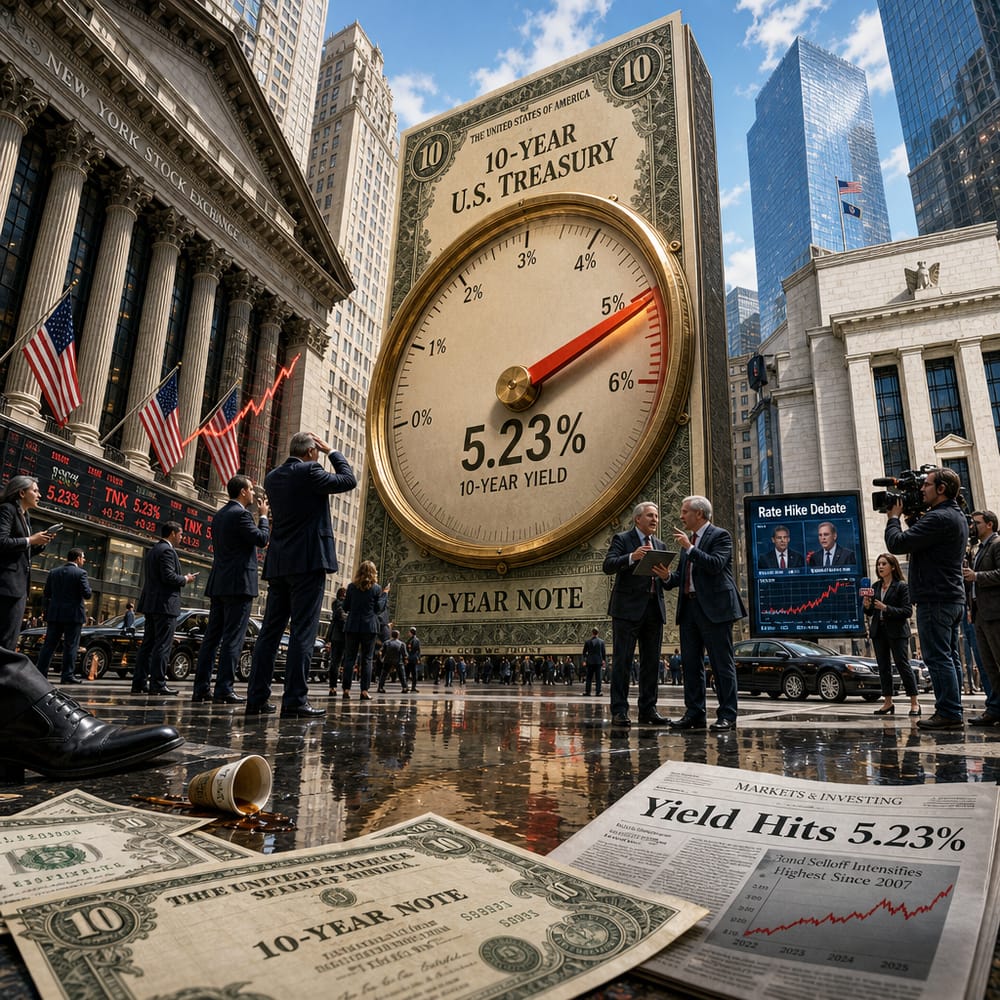
THE RETURN OF THE BOND KINGS: TREASURY YIELDS HIT 2007 PEAK
Remember 2007? Britney Spears shaved her head, the iPhone was born, and Treasury yields were last north of 5%. Now, just like that trucker cap you secretly still have, the 5.23% yield on the 10-year Treasury bond is back, sparking quite the debate among market mavens. But unlike pop culture fads, these rising Treasury yields have real-world implications that could shake your wallet, rattle the housing market, and maybe even send the Fed scrambling for its rate-hike button.
Let’s break it down. Treasury yields—basically the interest Uncle Sam pays you to borrow your money—are shooting up, making headlines and turning a few heads, especially at the Federal Reserve. With the 10-year Treasury yield peaking at levels not seen since the pre-recession days, everyone’s wondering: is the Fed going to hike rates again, or are we about to see another episode of economic déjà vu?
THE HOUSING MARKET: DREAM HOME OR NIGHTMARE?
Let’s talk housing. Rising Treasury yields do not play well with mortgage rates. If you're dreaming of that white picket fence, brace yourself—borrowing just got pricier. Treasury yields serve as a benchmark for everything from mortgage rates to car loans. As they rise, expect those dreamy mortgage rates to follow suit, making that four-bedroom house with the granite countertops a bit more of a stretch.
Higher borrowing costs can cool down the red-hot housing market faster than a popsicle on a summer’s day. Less affordable loans mean fewer folks can buy homes, which could slow down home sales and maybe even drag prices down. So, if you’re in the market, keep your eyes on those rates—your dream home’s price tag could change overnight.
THE FED’S GAME PLAN: TO HIKE OR NOT TO HIKE?
Janet Yellen’s successor at the Fed, Jerome Powell, must feel like he’s caught in a time warp. The Fed’s been playing the rate game carefully, lifting rates to tame inflation without sending the economy into a tailspin. But with Treasury yields climbing, the Fed might have to rethink its strategy. The big question: will they raise rates again?
Here’s the skinny: higher Treasury yields can ease the pressure on the Fed. If market forces are already pushing borrowing costs up, the Fed might hold off on further rate hikes. However, if inflation sticks around like that uninvited guest at a house party, the Fed could very well step in with another hike or two.
SECTORS ON THE EDGE: WINNERS AND LOSERS
So, who wins and who loses in this rising yield fiesta? First off, banks—the Robin Hoods of rising rates—could see fatter profits. They borrow at short-term rates, lend at long-term rates, and when yields rise, their spread (fancy talk for profit) widens. This could be a boon for financial stocks, so if you’ve got shares in JPMorgan or Bank of America, you might see some green.
On the flip side, companies with high debt—think utilities and real estate investment trusts—might feel the pinch. They’ll face steeper borrowing costs, squeezing operations and potentially profits. So, if your portfolio’s heavy on utilities, you might want to reconsider your allocations.
THE WIDER ECONOMY: WALKING THE TIGHTROPE
Finally, the broader economy could tread a fine line. Higher yields might attract foreign investments, boosting the dollar. While a strong dollar sounds like a win, it can hurt U.S. exports by making them pricier abroad—an unwelcome twist for manufacturers and tech firms relying on overseas sales.
In short, rising Treasury yields are like a double-edged sword—cutting both ways through the economy. They signal confidence in economic growth, but also herald higher costs for consumers and businesses alike.
Looking ahead, keep a close watch on those yields—they’re the canary in the coal mine for many economic shifts. Whether you’re eyeing a new home, pondering the Fed’s next move, or just trying to dodge financial turbulence, stay nimble. Remember, in the world of markets, the only constant is change.
This article is for informational purposes only and is not investment advice. Always do your own research or consult a licensed financial professional before making investment decisions.
© Copyright 2024. All Rights Reserved.
© Copyright 2024. All Rights Reserved.