

10-Year Treasury Yield Hits Highest Since 2002
Wednesday, October 07, 2026
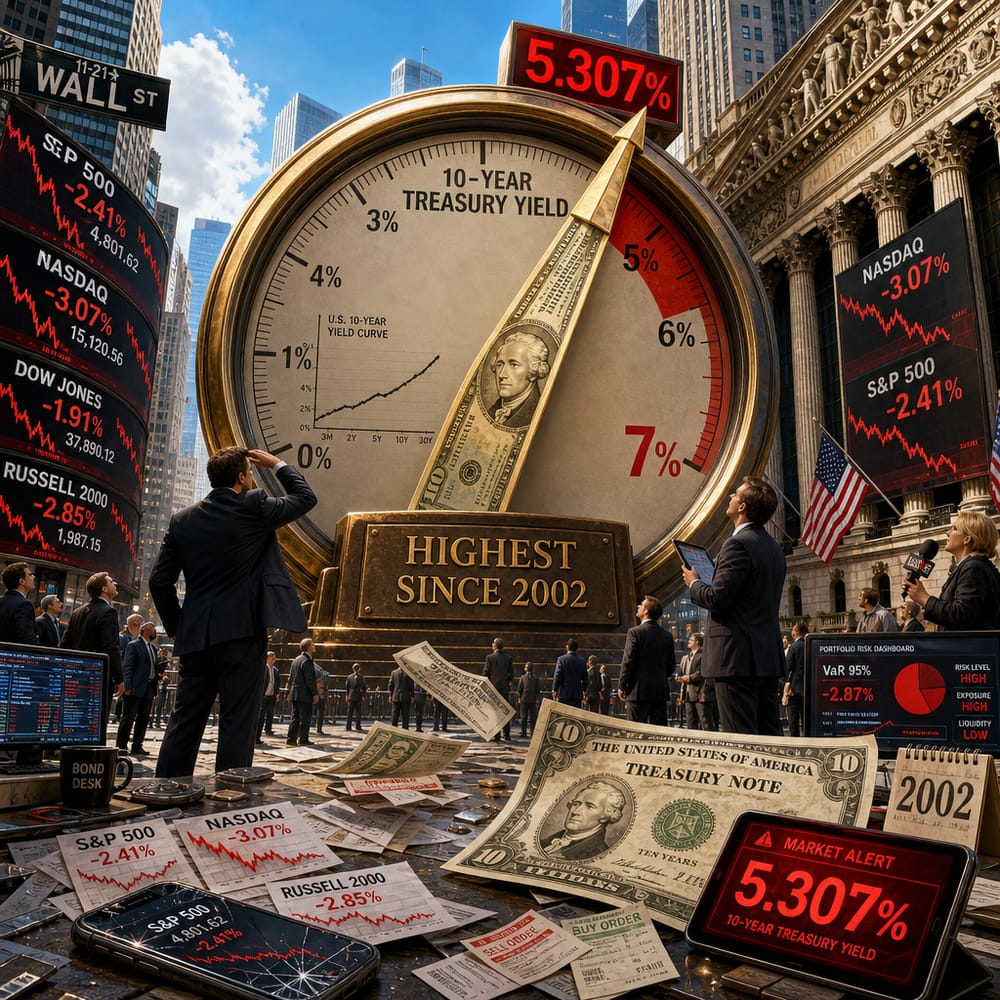
U.S. 10-Year Treasury Yield Hits Highest Since 2002
Hold on to your hats, financial adventurers, because the 10-year Treasury yield just hit a level we haven't seen since Britney was rocking the charts in 2002. That's right, the yield surged to 5.307%, causing a shiver to run down Wall Street's spine. It's not just a number—it’s a seismic shift with ripples that are shaking up everything from your stock portfolio to your future mortgage rates.
So why should you care about a bunch of Treasuries, you ask? Well, when the 10-year yield skyrockets, it’s like the financial gods are raising a red flag for investors everywhere. Higher yields mean higher borrowing costs for everything from corporate debt to personal loans. And when money gets expensive, investors start rethinking their choices, often leaving equity markets in a bit of a panic.
Let’s break it down: rising yields typically put a damper on stock valuations. It’s a bit of a seesaw relationship—when bond yields go up, stocks often go down because investors can get better returns with less risk by snuggling up to Uncle Sam’s Treasuries instead. This seesaw action is causing the S&P 500 and its cohorts like the Nasdaq and Dow to feel the heat. As yields climb, these indexes have been jittery, and that’s putting it lightly.
Now, let’s take a little tour around the sectors. Tech stocks are feeling the burn particularly hard. When yields rise, the future earnings of these growth-oriented companies look less attractive because the present value of those earnings shrinks. Imagine investing in the latest AI wonder from Meta—sure, it’s the hottest thing since sliced bread, but with higher yields, the long-term payoff suddenly seems meh.
On the flip side, financials might actually get a bit of a spring in their step. Banks like higher rates because they can charge more for loans than what they pay in interest, potentially boosting their profits. So, if you're invested in banks, you might not be crying in your coffee just yet.
As for the future, analysts are donning their turban hats and crystal balls to make some predictions about these yield movements. Many believe that we might not be at the peak yet. With inflation fears bubbling higher than your Sunday morning mimosa, the Fed's next steps are under a magnifying glass. The central bank is currently playing it cool, likely holding rates steady for now, but don't be surprised if they start adjusting their strategy if inflation doesn't calm its jets.
And then there’s the upcoming 10-year note auction—talk about a nail-biter. The U.S. Treasury is all set to test the waters with a $39 billion sale of 10-year notes. It’s kind of like a financial reality show: will investors bite at these juicy yields, or will they demand an even bigger premium given the economic uncertainty? The results could give us a fresh read on the appetite for U.S. debt amidst all this rate drama.
So, what should you do as an investor? If you're the conservative type, consider looking at those Treasuries—they're boring but reliable. If you're more of a risk-taker, keep an eye on sectors that might benefit from these changes, like financials. And if you’re somewhere in between, maybe it's time to reassess your portfolio.
As we watch how this saga unfolds, one thing's for sure: the financial landscape is shifting, and it’s taking its cues from these rising yields. It’s a game of risk and reward, and the stakes are high. So fasten your seatbelt, keep your eyes peeled, and don’t forget to enjoy the ride. After all, it’s not every day you get to witness history in the making—even if it does feel a bit like financial whiplash.
This article is for informational purposes only and is not investment advice. Always do your own research or consult a licensed financial professional before making investment decisions.
© Copyright 2024. All Rights Reserved.
© Copyright 2024. All Rights Reserved.